01SPINAL CORD & NERVE ROOTS
Spine surgery monitoring
Including spinal fusions
Monitoring support during spinal fusions and other spine procedures, with attention to spinal cord and nerve root function.
INTRAOPERATIVE NEUROMONITORING
Real-time insight into nervous system function. Attentive monitoring for the surgical teams and patients who depend on it.
Explore our servicesSouth Texas roots. Statewide reach.
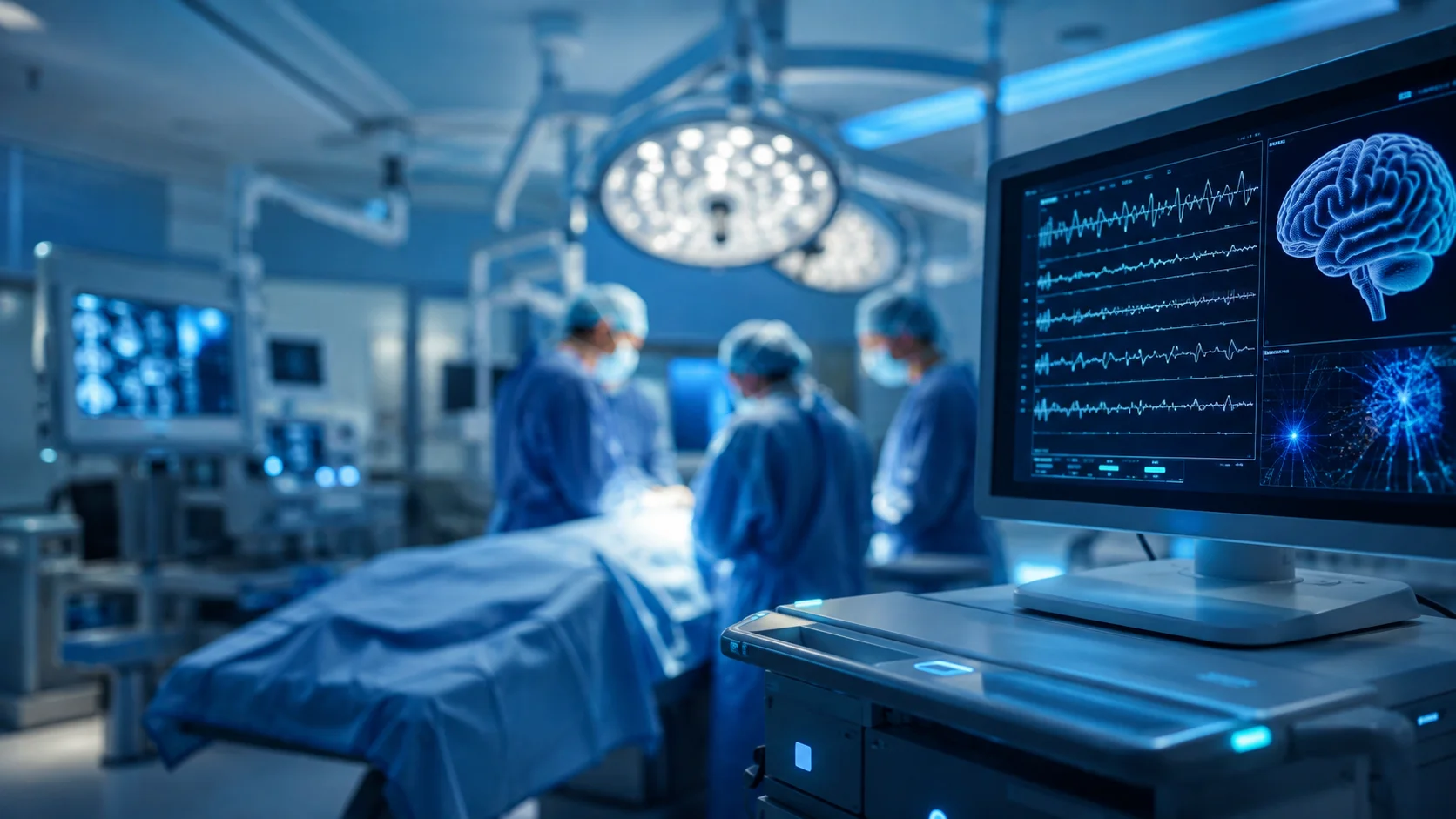
Supporting surgical care since 2007
Spine Cranial Vascular
01 / WHO WE ARE
Behind every signal is a person.
LG Neuromet, Inc. provides intraoperative neuromonitoring (IONM) to hospitals and surgical teams across Texas. Based in South Texas, our work centers on careful monitoring, clear communication, and collaboration in the operating room.
During surgery, IONM tracks electrical activity and responses in selected neural pathways. Changes in those signals provide information the surgical and anesthesia teams can use to assess nervous system function.
Learn about IONM at Johns Hopkins Medicine (opens in a new tab)02 / SURGICAL MONITORING SERVICES
LG Neuromet provides intraoperative neuromonitoring for spine, cranial and vascular surgery. Each case is planned around the procedure, the patient and the neural structures at risk.
Including spinal fusions
Monitoring support during spinal fusions and other spine procedures, with attention to spinal cord and nerve root function.
Brain and cranial nerve procedures
Monitoring support during cranial procedures involving the brain, brainstem or cranial nerves. The monitoring plan focuses on the structures relevant to the operation.
Carotid endarterectomy (CEA)
Monitoring support during carotid endarterectomy, helping the surgical team track changes in brain function throughout the procedure.
03 / MONITORING MODALITIES
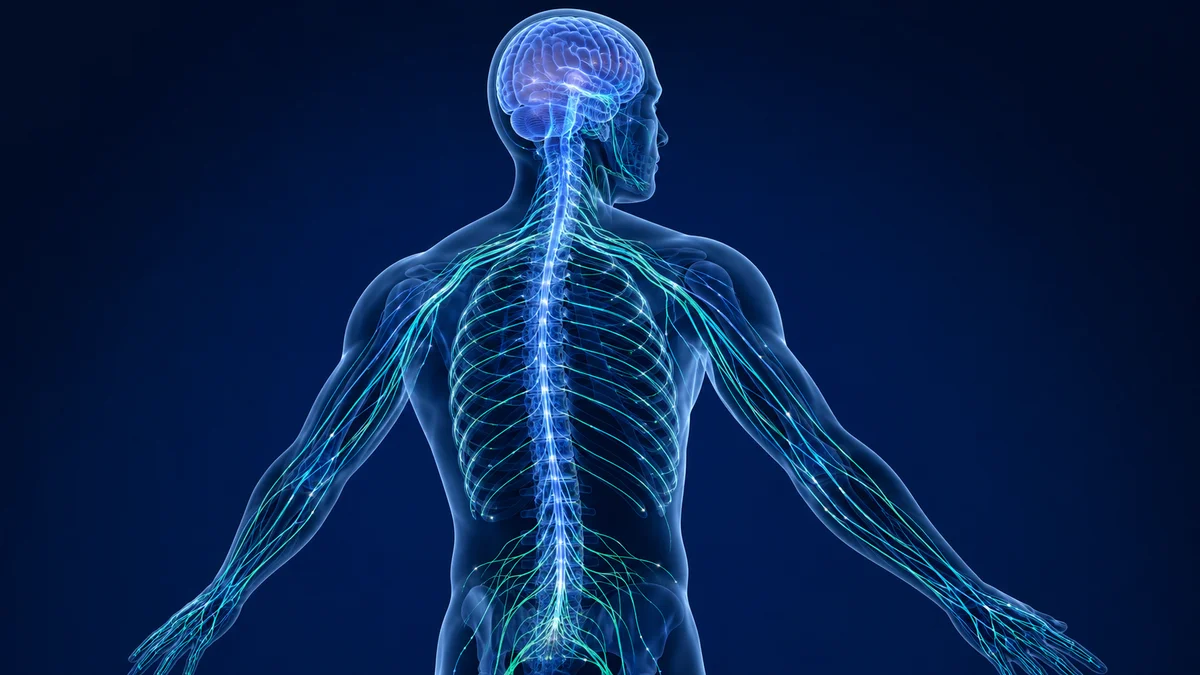
Modalities are the tests and recordings used within our surgical monitoring services. One or more may be selected to assess different aspects of nervous system function.
Somatosensory evoked potentials
Tracks responses along sensory pathways following peripheral nerve stimulation.
Motor evoked potentials
Assesses motor pathway function through responses to stimulation.
Electromyography
Records muscle activity to help assess the function of associated nerves.
Electroencephalography
Monitors the brain's electrical activity during selected surgical procedures.
Auditory evoked potentials
Tracks neural responses to sound, including responses from the brainstem.
Visual evoked potentials
Assesses responses to visual stimulation in selected procedures.
The combination of modalities depends on the procedure and the clinical team's assessment. For example, EEG and SSEP may be used together during carotid endarterectomy to monitor brain function. Read the clinical study (opens in a new tab).
04 / OUR METHODOLOGY
Thoughtful preparation, attentive monitoring and clear communication connect our work to the surgical team.
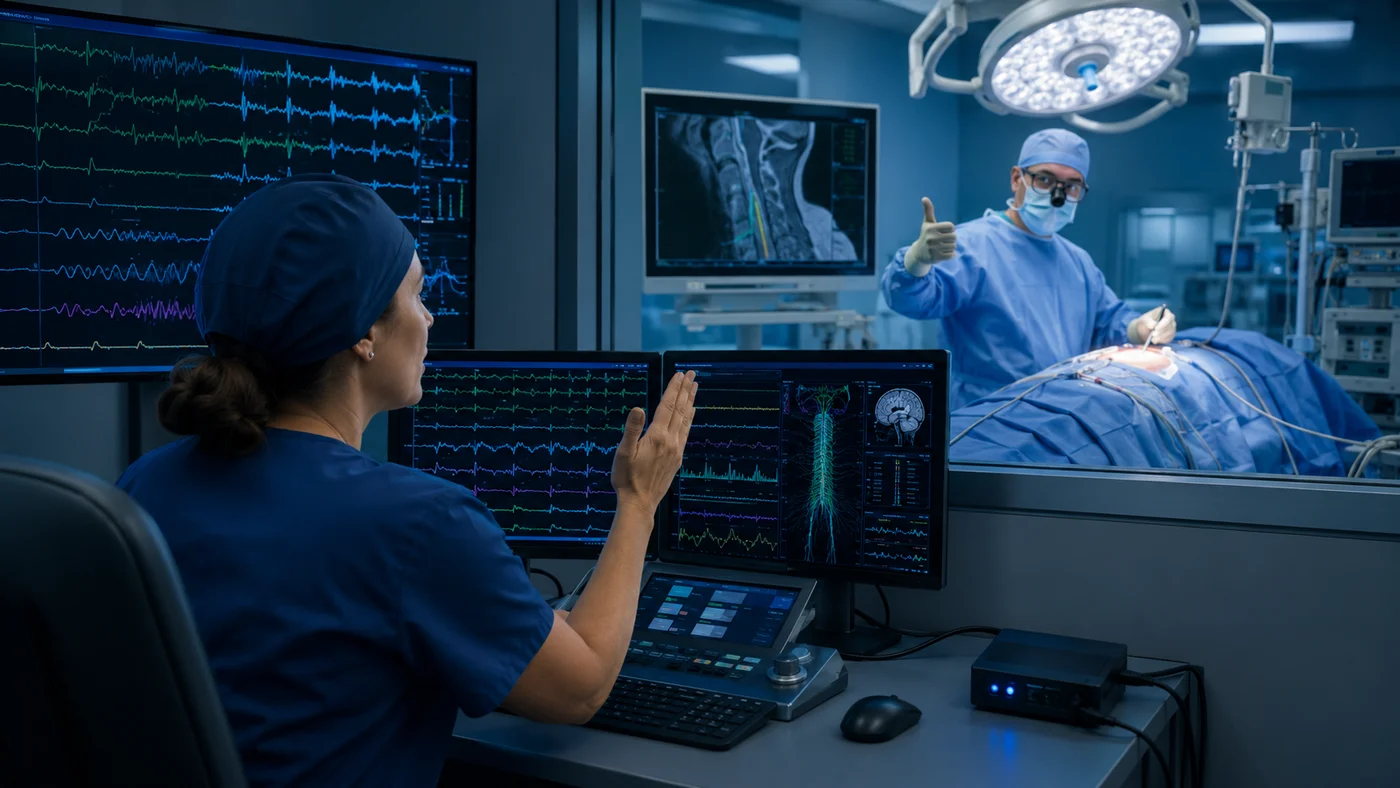
The monitoring plan considers the operation and the neural structures involved, with modalities selected for the individual case.
Careful attention to neurophysiological recordings helps the team follow changes during the monitored procedure.
Relevant monitoring information is shared with the surgical and anesthesia teams to support their assessment as surgery progresses.
ROOTED IN SOUTH TEXAS
Here for Texas surgical teams.
Local perspective.
Statewide service.
05 / CONTACT US
For information about our intraoperative neuromonitoring services, coverage or working with LG Neuromet, email our team.
info@lgneuromet.com